 EN
 NL

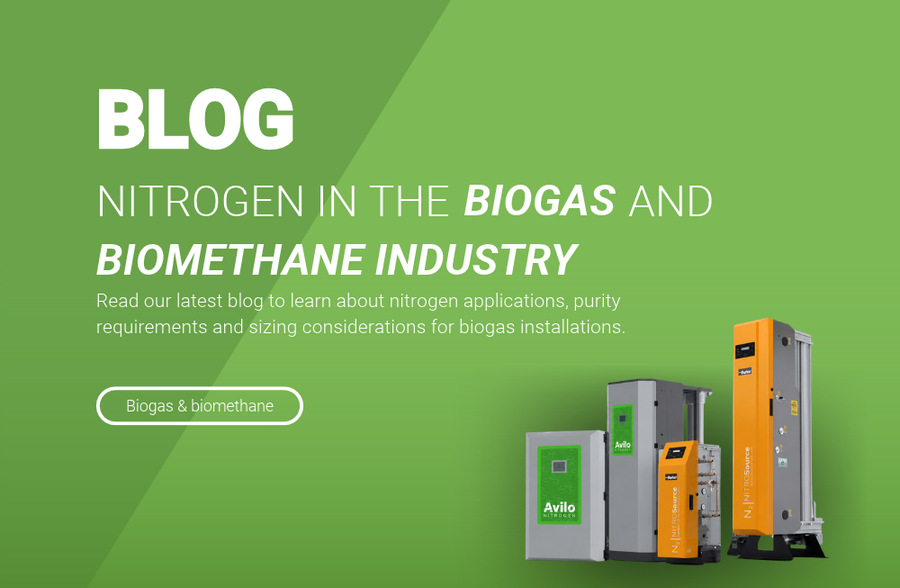
Biogas consists largely of methane. When combined with oxygen, methane forms a flammable mixture. Nitrogen displaces oxygen from pipelines, tanks and process equipment, keeping the installation safe during start-up, maintenance and shutdown.
In this blog, you will learn how nitrogen is used in biogas and biomethane installations, which nitrogen generation technology is suitable for each application and what to consider when sizing an on-site nitrogen generation system.
Why is nitrogen needed in a biogas installation?
Nitrogen is used to keep oxygen and methane separated. Nitrogen is non-flammable and does not react with biogas or biomethane under normal process conditions. This allows a system to be filled, purged or pressurised with nitrogen without creating a flammable mixture.
In most biogas and biomethane installations, nitrogen is used for inerting and purging, commissioning, maintenance, pressure and leak testing, and protecting tanks and buffer vessels. For gas grid injection, nitrogen can also be used to adjust the gas quality of biomethane.
Nitrogen for inerting and purging
Before biogas can enter a pipeline or tank, the oxygen must be removed. Nitrogen displaces oxygen from pipelines, tanks, compressors and other process equipment in a controlled manner. During shutdown or maintenance, the process works in reverse: nitrogen displaces the remaining biogas so that the equipment can be opened safely.
Nitrogen during commissioning, maintenance and shutdown
During commissioning, scheduled maintenance and shutdown, a temporarily higher volume of nitrogen is required. Nitrogen is used for purging and inerting equipment such as:
- gas pipelines;
- compressors;
- buffer vessels;
- biogas upgrading installations;
- gas treatment systems.
An on-site nitrogen generator produces nitrogen and stores it in a buffer vessel. This ensures sufficient capacity is available during periods of higher demand. The system is designed to accommodate both continuous consumption and periodic peak demand.
Nitrogen for pressure and leak testing
Dry nitrogen is used for pressure and leak testing of pipelines, valves, fittings and process components. The system is pressurised without introducing oxygen. After testing, methane or biomethane can be introduced again.
Nitrogen in biogas upgrading and biomethane production
When upgrading biogas to biomethane, CO₂ is removed, along with other components from the raw biogas depending on the process. Nitrogen is used around the upgrading installation for purging, inerting, commissioning and maintenance. This applies to installations based on membrane separation, PSA and other upgrading technologies.
A nitrogen generator integrated into the installation supplies nitrogen for all these activities, eliminating the need to arrange deliveries of cylinders or cylinder bundles for each operation.
Adjusting biomethane gas quality with nitrogen
Biomethane injected into the natural gas grid must meet the gas quality requirements of the grid operator. Nitrogen is non-flammable. By dosing nitrogen in a controlled manner, the calorific value and other combustion properties of the gas can be adjusted.
The required nitrogen volume and purity depend on the composition of the biomethane, the grid specifications and the desired final gas quality. Since this application requires continuous nitrogen consumption, on-site generation is a logical choice.
Nitrogen for tank blanketing
Tank blanketing involves filling the gas space above the liquid in a tank or buffer vessel with nitrogen. This reduces the amount of oxygen in the gas space. Depending on the installation design, blanketing is used during shutdown, maintenance, filling and emptying operations, or in processes requiring an oxygen-reduced atmosphere.
Nitrogen generator for biogas: membrane or PSA?
The main differences between membrane and PSA technology are the achievable nitrogen purity, energy consumption and maintenance requirements. Both technologies separate nitrogen from ambient air.
Membrane technology produces nitrogen with a purity of up to approximately 99.6% N₂ and is energy-efficient and low-maintenance. This purity is sufficient for many purging and inerting applications. PSA technology (Pressure Swing Adsorption) delivers nitrogen purities of up to 99.9995% N₂ and is used when higher purity is required.
Please note: PSA is also used in the biogas industry as an upgrading technology for biomethane. This is a different process from PSA nitrogen generation.
Purity is not the only factor determining the choice of technology. The required flow rate, operating pressure, ambient temperature and consumption profile are also important.
What to consider when sizing a nitrogen generation system
Capacity, purity and operating pressure
The requirements of the application are decisive, rather than the highest achievable specifications. Flow rate, purity and operating pressure together determine the size of the system. An undersized system cannot provide sufficient capacity during peak demand, while an oversized system leads to unnecessary investment and operating costs.
Continuous consumption and peak demand
In a biogas installation, continuous consumption, such as blanketing or gas conditioning, alternates with periodic peaks during maintenance or commissioning. A buffer vessel ensures that sufficient nitrogen is available to meet these peaks.
Safety in the installation area
Nitrogen displaces oxygen, including in the area where the generator and buffer vessel are installed. Oxygen monitoring and adequate ventilation are therefore essential for a safe installation and should be considered as part of the workplace risk assessment.
Benefits of an on-site nitrogen generator
Nitrogen supplied in cylinders, cylinder bundles or as liquid nitrogen requires transport, storage and delivery planning. A nitrogen generator produces nitrogen from ambient air whenever the process requires it. This offers the following benefits:
- continuous availability, without dependence on delivery schedules or cylinder replacements;
- nitrogen purity can be adjusted to meet the requirements of each application;
- no cylinder or tank rental costs and no nitrogen delivery transport costs;
- suitable for integration into new and existing biogas installations.
Nitrogen for your biogas or biomethane project
Avilo supplies and installs nitrogen generation systems based on membrane and PSA technology. Together with you, we determine the required flow rate, purity, operating pressure and consumption profile of your installation. Contact us for a no-obligation consultation or a cost estimate tailored to your requirements.