 EN
 NL

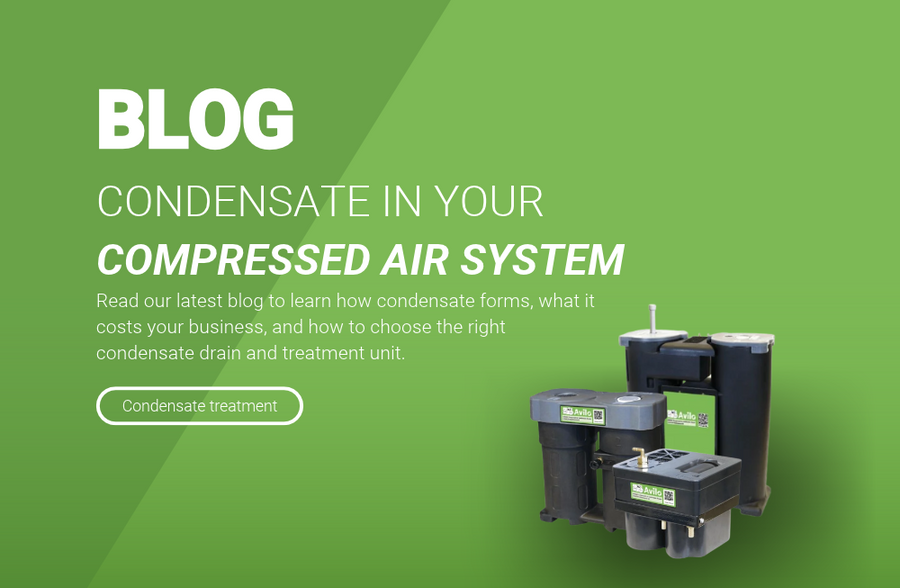
Every compressed air system produces water. Ambient air contains water vapour, and when that air cools after compression, some of the moisture condenses into liquid water. In an oil-lubricated compressor, this water also picks up compressor oil. This means condensate is not a by-product you can simply leave in the system, but industrial wastewater that must be drained and treated before it can be discharged.
In this blog, you will learn how condensate forms, what inadequate drainage can cost your business each year, how to choose between different types of condensate drains, and what to consider when selecting a condensate treatment unit.
What is condensate treatment?
Condensate treatment involves draining and treating condensate from a compressed air system to make it suitable for discharge. The process consists of two steps, performed by two separate components:
- The condensate drain removes accumulated condensate from the system.
- The condensate treatment unit, also known as an oil-water separator, then separates the oil from the water.
These two components are not interchangeable. A drain without a treatment unit leaves you with a container of hazardous waste, while a treatment unit without a properly functioning drain will not receive the condensate in the first place.
How does condensate form, step by step?
- Air intake
The compressor draws in ambient air, which always contains water vapour. The amount depends on the temperature and relative humidity at that moment. - Compression
During compression, pressure and temperature increase. The water vapour remains in gaseous form but is now compressed into a much smaller volume. In an oil-lubricated compressor, compressor oil is also introduced. - Cooling below the pressure dew point
In the aftercooler and throughout the rest of the system, the compressed air cools down. Once the temperature drops below the pressure dew point, the air can no longer retain all the water vapour, and some of it condenses into liquid water. - Collection
Condensate accumulates in the aftercooler, air receiver, filters and dryer. It must be removed at each of these points.
The amount of condensate produced can vary considerably from day to day. Intake temperature, humidity, compressor capacity and operating conditions all determine the condensate load. On a warm, humid summer day, the amount can easily double compared with winter. Therefore, size your equipment for peak demand rather than the annual average.
What are the costs of inadequate condensate drainage?
Condensate that remains in the system costs your business money in three ways. The first two are well known, while the third is often overlooked.
Damage to the system
Moisture accumulates in the air receiver, filters and pipework. This leads to corrosion, malfunctions in pneumatic components and compressed air quality that can no longer be guaranteed. A filter filling with condensate also increases the pressure drop, and every additional 0.1 bar of pressure drop increases compressor energy consumption by approximately 0.6%.
Disposal as hazardous waste
Oil-contaminated condensate must not be discharged into the sewer system without treatment. If you arrange collection by a waste disposal company, you pay per litre plus collection charges. A 22 kW compressor produces approximately 10 to 15 litres of condensate per operating day. Over a year, this becomes a recurring expense that a condensate treatment unit can typically recover within one to two years.
Compressed air losses
A timer-controlled drain opens at fixed intervals, regardless of whether condensate is present. While it is open, compressed air escapes, wasting the energy used to produce it. With a 4 mm drain opening and an operating pressure of 7 bar, approximately 57 m³ of free air escapes per hour while the valve is open. The annual cost depends entirely on the settings:
- 3 seconds every 5 minutes: approximately 4,600 m³ per year, costing around €75;
- 5 seconds every 2 minutes: approximately 19,200 m³ per year, costing around €315;
- 10 seconds every 2 minutes: approximately 38,000 m³ per year, costing around €625.
These calculations are based on 8,000 operating hours, 0.11 kWh per m³ of compressed air and an electricity price of €0.15 per kWh. These costs apply to each individual drain, and most systems have four to six drains. A zero-loss condensate drain eliminates this expense entirely.
However, the opposite problem can be just as costly. If the drain opens too briefly or too infrequently, condensate remains in the system, resulting in the damage described above. A timer-controlled drain therefore always requires a balance between energy losses and retained moisture.
Which condensate drain is suitable for your system?
There are three commonly used types of condensate drains. All three remove condensate from the system, but they determine when to drain it in different ways.
Timer-controlled
The drain opens at a preset interval. The frequency and opening duration are adjusted to the expected amount of condensate. This type is suitable for predictable, constant operating conditions and a limited budget. However, compressed air losses are an inherent disadvantage, and the settings require periodic checks.
Magnetic level-controlled
The drain opens when the float reaches a certain level, responding to the actual amount of condensate. It operates without an external power supply, making installation in difficult-to-access locations straightforward. Contamination can interfere with the float mechanism, so periodic cleaning is necessary.
Electronic level-controlled
A sensor monitors the condensate level, and the valve opens without compressed air loss. The unit also provides fault notifications. This is a suitable choice for larger systems and critical applications. However, it requires a power supply and involves a higher initial investment.
For systems with varying condensate loads, a level-controlled drain is generally the preferred solution. It prevents both retained moisture and unnecessary compressed air losses. The Avilo Level Drain is a magnetic level-controlled condensate drain that operates without an external power supply.
How do you separate oil from condensate?
A condensate treatment unit passes condensate through adsorbent separation elements. These elements retain the oil, allowing the water to leave the unit with a significantly reduced oil content. No pump or regeneration cycle is required. The process relies on gravity and adsorption, making the system relatively low-maintenance.
Avilo OWS condensate treatment units combine different adsorption technologies. According to the product specifications, they reduce residual oil content to below 10 ppm. Whether the treated water may actually be discharged depends on the requirements of the relevant regulatory authority. These requirements vary between municipalities and water authorities. Check the applicable discharge limits before selecting a unit and retain the effluent analysis results.
Important considerations for emulsifying oils
Adsorption is effective when the oil can be separated from the water. If you use synthetic or emulsifying compressor oil, the oil remains suspended in the water, and a standard adsorption unit may not achieve the required discharge limits. In this case, an emulsion-splitting unit is necessary. Always check the safety data sheet of your compressor oil before selecting a treatment unit. This simple check can prevent complications later.
What determines the choice of a condensate treatment unit?
Four factors determine which type of condensate treatment unit you need:
Compressor capacity
This is the starting point for the selection process. The Avilo OWS series covers maximum compressor capacities from 2 to 60 m³/min.
Number of connected compressors
Take simultaneous operation into account. Two compressors operating at the same time also produce condensate simultaneously.
Operating conditions
Operating hours, ambient temperature and humidity determine the actual condensate load. Size the unit for peak demand.
Type of compressor oil
This determines whether an adsorption-based unit is sufficient or whether emulsion splitting is required, as explained above.
For smaller systems, the Avilo OWS2 (up to 2 m³/min) is available. This unit is replaced as a complete assembly, without the need to change individual filter elements. For higher capacities, options include the Avilo OWS30 and Avilo OWS60. An undersized unit becomes saturated more quickly and may no longer meet the required discharge limits.
What should you consider during installation and maintenance?
Condensate drains and treatment units require relatively little maintenance, but proper installation and servicing are essential. Four practical considerations:
- Install condensate drains in frost-free locations. A frozen drain line is one of the most common causes of water entering the compressed air network during winter.
- Do not connect multiple drains to a single pressurised collection line. Pressure from one drain can prevent another from operating correctly.
- Ensure an unrestricted, downward-sloping discharge line to the condensate treatment unit. Back pressure can interfere with the separation process.
- Follow the recommended replacement intervals for separation elements and check the saturation indicator. A saturated element may allow oil to pass through without any visible warning.
In addition, inspect the drains periodically. Check whether they still open and close correctly and whether the drain lines are free from blockages. For timer-controlled drains, this also includes checking the drainage interval. The required inspection frequency depends on the condensate load, operating hours and type of compressor oil used.
Condensate treatment solutions from Avilo
Avilo supplies condensate drains and condensate treatment units for compressed air systems of all sizes, from individual drains to complete treatment systems. We provide advice not only on selecting the right components but also on pretreatment and system configuration, as these factors play an important role in reliable operation.
Send us your compressor capacity, operating hours and type of compressor oil, and we will help you select the appropriate solution. Explore our condensate treatment range or contact us for technical advice.