 EN
EN
 NL
NL

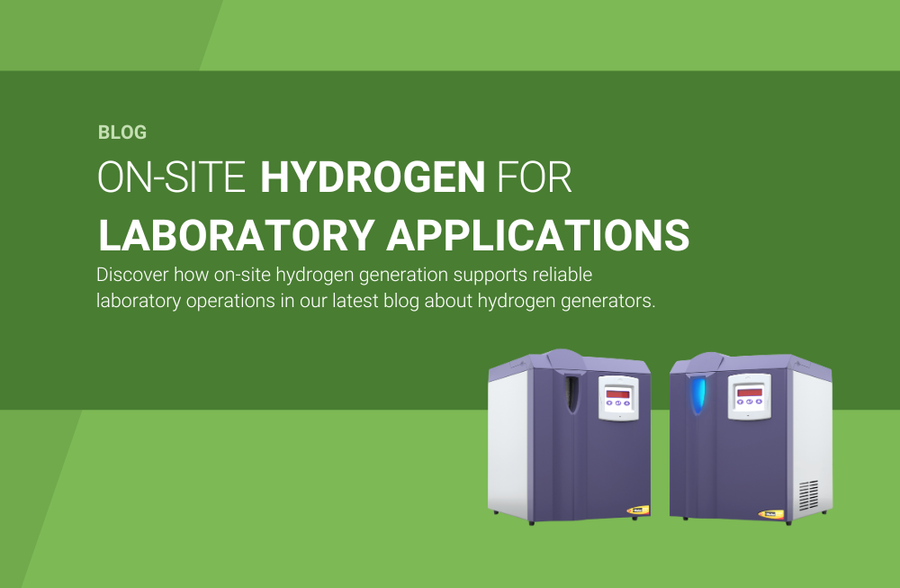
A hydrogen generator enables controlled on-site production of hydrogen. In laboratories, a hydrogen generator is mainly used for GC and GC/MS applications. These applications require a constant, pure and safe supply of hydrogen. A hydrogen generator provides a predictable and stable gas source for this purpose. In this blog you will read what a hydrogen generator is, how the system works and why having your own GC or GC/MS hydrogen generator is beneficial.
What is a hydrogen generator? 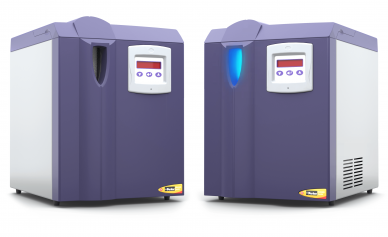
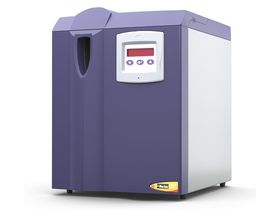
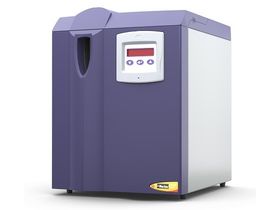
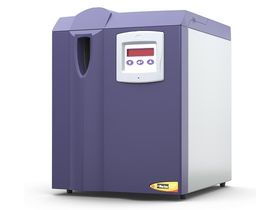
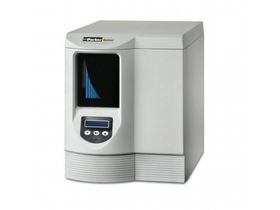
A hydrogen generator is a compact unit that converts water into hydrogen. You can see it as a small, dedicated hydrogen plant for professional use. The hydrogen generator supplies hydrogen at a fixed quality, with a constant flow and pressure. This gives you a reliable gas source without relying on gas cylinders or external deliveries.
How does a hydrogen generator work?
A hydrogen generator converts deionised water into pure hydrogen via electrolysis. The system uses electrical energy to split water into hydrogen and oxygen. The most common electrolysis technologies are alkaline, solid oxide and proton exchange membrane (PEM) electrolysers. In laboratory generators only PEM electrolysers are used, because they deliver the highest hydrogen purity. For applications that require extra purity, the remaining moisture can be removed with a palladium purifier or an integrated dryer.
This makes the unit fully autonomous. Once you switch on the system, production starts and the generator continuously monitors the gas quality. The output automatically adjusts to your consumption and supplies hydrogen directly to your process.
Where traditional (helium) gas cylinders depend on transport and stock, a hydrogen generator produces the gas directly on site and without limit. As a result, cylinder changeovers, logistics and the risk of downtime are eliminated.
The advantages of a hydrogen generator compared to helium
-
Speed and efficiency: Hydrogen has a higher diffusivity, which allows for faster analyses because higher flow rates are possible without loss of efficiency.
-
Costs: Helium is becoming less available and more expensive, while hydrogen can be produced directly and continuously.
-
Generator: On-site production with a hydrogen generator reduces costs and avoids handling gas cylinders, eliminating logistics and manual handling.
Hydrogen generator for GC and GC/MS applications
In GC and GC/MS instrumentation, hydrogen is used as carrier gas and as fuel gas.
Carrier gas
In many laboratories hydrogen is used as carrier gas due to its high speed, efficiency and optimal separation in the chromatography column. A hydrogen generator supplies hydrogen with a very high purity (up to 99.9999 percent), ensuring reproducible GC analysis and preventing pressure fluctuations.
This is essential for detectors such as TCD or coupled GC-MS systems.
Fuel gas
For detectors such as FID (Flame Ionization Detector) and FPD (Flame Photometric Detector), hydrogen serves as fuel gas. The quality of this flame determines the accurate response of the detector. A hydrogen generator produces hydrogen immediately at the required purity and with a stable flow, keeping the performance of FID and FPD detectors consistent.
Additional gases in GC instrumentation
In addition to hydrogen, nitrogen and Zero Air also play an important role in GC analyses. Avilo supports this complete gas supply:
-
Nitrogen generators (PSA technology) produce nitrogen for GC carrier gas or make-up gas (up to 99.9995 percent).
-
Zero Air generators supply high quality Zero Air as flame support gas for FID and FPD detectors.
Hydrogen generators from Parker Domnick Hunter
Avilo supplies hydrogen generators from Parker Domnick Hunter and Parker Balston. These laboratory generators are among the most reliable systems on the market and are suitable for applications where high purity, operational reliability and continuity are required. The hydrogen generators supplied by Avilo achieve purities up to 99.99999 percent, which is essential for analytical processes such as GC, GC/MS and other laboratory instrumentation. Hydrogen generators from Parker Balston and Parker Domnick Hunter provide laboratory grade hydrogen for GC fuel gas, GC carrier gas and TCD carrier gas.
Why is generating your own hydrogen beneficial?
Producing hydrogen yourself with a hydrogen generator offers clear advantages for laboratories and other professional environments. The main advantages are:
- Consistent quality and pressure, ensuring stable and reproducible analyses.
- 24/7 availability, fully aligned with your consumption.
- No dependence on gas cylinders, transport planning or external suppliers.
- Safer operation, because storage of high pressure cylinders is eliminated.
- Lower costs due to the elimination of rental, transport and stock management.
- Fewer administrative and logistics tasks, saving you time.
- Scalable capacity and pressure, matching the requirements of your process.
- Limited maintenance costs, keeping the total cost of ownership low.
Why are Avilo’s hydrogen generators not for home use?
Avilo’s hydrogen generators are designed for laboratories where hydrogen with a very high purity is required for GC and GC/MS applications. For home use or energy storage this level of purity is not necessary and producing it would require unnecessary energy and costs.
In addition, laboratory generators supply relatively small quantities of hydrogen at a low pressure. This is ideal for analytical equipment but insufficient for applications such as residential heating, energy storage or mobility, which require much higher capacities.
For these reasons our hydrogen generators are suitable exclusively for professional laboratory environments and not for use in homes or large scale energy applications.
Hydrogen generators at Avilo
Avilo is an authorised Parker Distributor & Repair Center. The range consists of the following product groups:
• Parker H-FUEL series : hydrogen generators for medium capacity with a high purity of approximately 99.9995 percent. Suitable for GC applications and analytical processes. See here the available models.
• Parker H-MD-CARRIER series : models for producing higher purity hydrogen up to approximately 99.99995 percent. Ideal for laboratories with multiple instruments. See here the available models.
• Parker H2PEM / H2PEMPD series : PEM generators with ultra high purity up to 99.99999 percent and capacities up to more than 1300 ml per minute. Developed for applications that require maximum stability and reliability. See here the available models.
• ChromGas H2F series : compact hydrogen generators for laboratories that want to supply several detectors at the same time. Suitable for small to medium flows. See here the available models.
Avilo supports you in selecting the right model, commissions the unit on site and provides maintenance and service. Curious which hydrogen generator matches your application? Please contact us for non binding advice.